
Unit 4: Watercolor Painting

Unit Overview
In this unit, students will explore watercolor as a painting medium through technique practice, experimentation, artist studies, and original artwork. Students will learn foundational watercolor skills, experiment with a variety of watercolor effects, and apply these techniques in two major projects inspired by Georgia O’Keeffe and Sonia Delaunay.
Students will complete:
Watercolor Flower Sketchbook Warm-Up
Watercolor Technique Sampler Pages
Georgia O’Keeffe Inspired Watercolor Flower Painting
Sonia Delaunay Inspired Abstract Watercolor Painting
Sketchbook Assignment: Flower in Watercolor
Quick Paint Challenge
You have 15 minutes to complete a watercolor painting of the flower demonstrated by your teacher in your sketchbook.
Focus On
Observation
Color mixing
Water control
Brush handling
Reference Photo:

Watercolor Introduction
What is Watercolor?
Watercolor is a painting method in which the paints are made of pigments suspended in a water-based solution.
Watercolor consists of four basic ingredients:
Pigment
Arabic Gum (binder)
Glycerin (alters viscosity)
Water (solvent)
Watercolors are usually transparent (although they can be opaque) and can be layered to create rich, complex colors.
History of Watercolor
Watercolor painting is extremely old, dating back to cave paintings and manuscript illustrations used by ancient Egyptians.
Watercolor became increasingly important throughout the European Middle Ages and Renaissance, eventually becoming recognized as a serious painting medium equal to oil painting.
Video
The History of Watercolor Painting in 15 Minutes
Materials
Watercolor Paper
90 lb
140 lb
300 lb
Paint & Palette
Pan Watercolors
Tube Watercolors
Brushes
Round
Flat
Angled
Fan
Mop
Natural Hair
Synthetic
Additional Materials
Water
Palette
Paper Towels
Pros & Cons of Watercolor
Pros
Lightweight and portable
Relatively inexpensive
Quick and fast-paced
Creates a unique transparency and glow
Fluid and organic
Cons
Difficult to correct mistakes
Requires planning and patience
Over-layering can create muddy colors
Water can be unpredictable
Watercolor Techniques
Texture & Special Effects
Alcohol
Drops of alcohol added to wet paint dry faster than surrounding paint and create unique textures.

Lifting
Removing paint from paper using a sponge or paper towel.

Masking
Preserving white areas using tape or masking fluid.

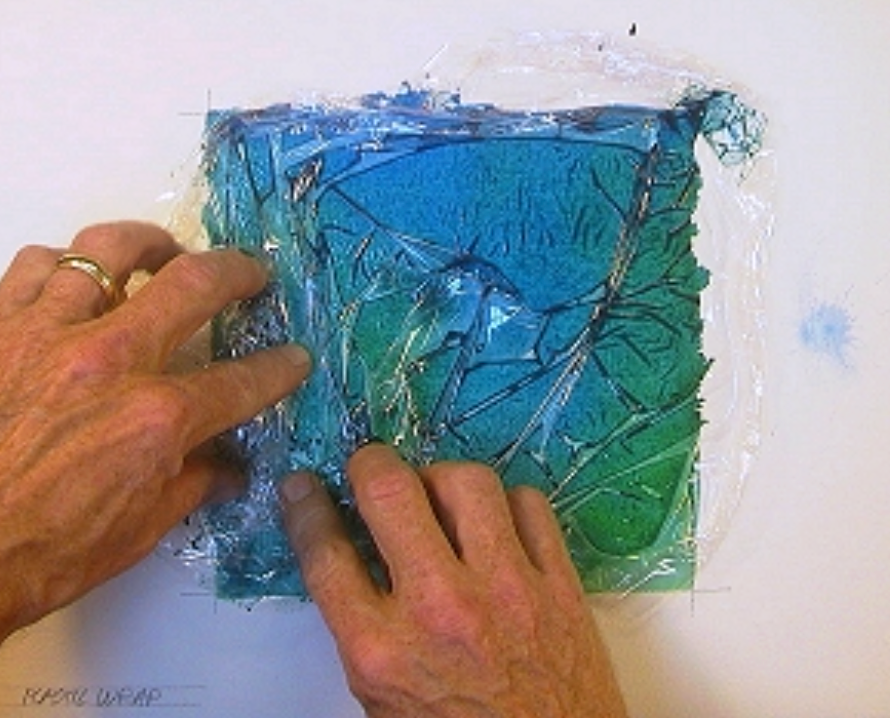
Plastic Wrap
Applied to wet paint and removed after drying to create texture.
Salt
Applied to wet paint to create speckled textures.

Scratching
Scratching into wet paper to create line and texture.

Splattering
Flicking paint onto the paper surface.

Stamping
Applying paint using a sponge or textured object.

Tissue Paper
Applied to wet paint and removed after drying.

Wax Resist
Wax prevents watercolor from penetrating the paper.

Water Application Techniques
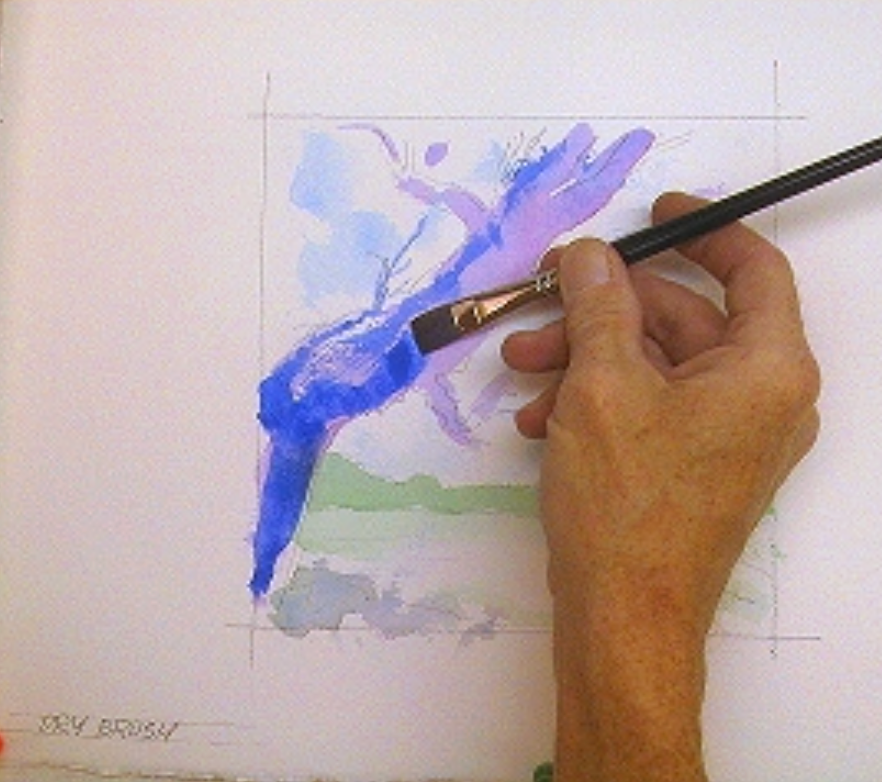
Dry Brush
Applying paint to dry paper with minimal water.
Wet-on-Wet
Applying paint to an area that has already been wet with clean water.

Glazing
Applying transparent layers after previous layers have dried.

Watercolor Technique Practice
Page One: Watercolor Fundamentals
Create one sketchbook page divided into 10 sections.
Practice the following:
Flat Wash
Graded Wash
Color Blend Wash
Dry Brush
Dry Blend of Two Colors
Wet-on-Dry (Layering)
Drop Color on Wet Color
Wet-on-Wet
Negative Painting
Hard & Soft Edges
Teacher Demonstration:

Page Two: Watercolor Experimentation
Create a second sketchbook page divided into 9 sections.
Practice:
Alcohol
Salt
Lifting
Masking
Splattering
Eraser
Stamping
Wax Resist
Watercolor Pencils
Teacher Demonstration:

Watercolor Technique Sampler Rubric (4-Point Scale)
Criteria | 4 - Advanced | 3 - Proficient | 2 - Developing | 1 - Beginning |
Completion of Techniques | All required techniques are completed and clearly demonstrated. | Most techniques are completed successfully. | Several techniques are incomplete or unclear. | Many techniques are missing. |
Understanding of Techniques | Demonstrates strong understanding of how each technique functions. | Demonstrates adequate understanding. | Limited understanding shown. | Little understanding demonstrated. |
Craftsmanship | Neat, organized, and carefully labeled. | Mostly neat with minor issues. | Some messy or rushed sections. | Poor craftsmanship throughout. |
Experimentation & Effort | Shows curiosity, risk-taking, and thoughtful experimentation. | Good effort and experimentation. | Limited experimentation. | Minimal effort shown. |
Project 1: Georgia O’Keeffe Inspired Watercolor Flowers
Artist Notes: Georgia O’Keeffe (1887–1986)
Early life on a Wisconsin dairy farm
Studied at the Institute of Chicago
Frustration with traditional art education
Commercial illustration career
Teaching career
Jack-in-the-Pulpit story
Alfred Stieglitz relationship
New Mexico years
Flower paintings
Southwestern landscapes
Record-breaking auction price
Continued creating art until age 95

Discussion Question
Although O’Keeffe denied it, many critics believed her flower paintings represented the female form.
What do you think? Can artwork have meanings beyond what the artist intended?
Assignment
Using Georgia O’Keeffe as inspiration, create your own watercolor flower painting.
Paper Size
9" x 9"
Requirements
Good composition
Realistic observation
Effective value and blending
Proper watercolor techniques
Strong craftsmanship
Steps
Mask off a border.
Choose a flower photo.
Draw lightly with pencil.
Paint large shapes first.
Avoid touching wet shapes together.
Layer and blend color.
Add watercolor pencil or Prisma details if desired.
You Will Be Graded On
Composition
Realism
Watercolor techniques
Blending
Craftsmanship
Student Examples
Georgia O’Keeffe Flower Painting Rubric (4-Point Scale)
Criteria | 4 | 3 | 2 | 1 |
Composition & Drawing | Excellent composition and accurate drawing. | Good composition with minor errors. | Developing composition and drawing skills. | Incomplete or inaccurate drawing. |
Watercolor Technique | Demonstrates excellent control of watercolor processes. | Uses techniques successfully. | Limited control of techniques. | Techniques largely absent. |
Value & Blending | Smooth blending and strong value range. | Good blending and value. | Some blending but inconsistent. | Minimal blending or value. |
Craftsmanship | Exceptional effort and attention to detail. | Neat and complete. | Some unfinished areas. | Incomplete or rushed. |
Project 2: Sonia Delaunay Inspired Abstract Watercolor Painting
Artist Notes: Sonia Delaunay (1885–1979)
Birth in Ukraine
Adoption by the Terk family
Education in Paris
Influence of Fauvism and Cubism
Marriage to Robert Delaunay
Patchwork quilt for Charles
Development of Orphism
Textile and fashion design
Furniture and automobile design
Louvre retrospective
French Legion of Honor
Legacy as a Renaissance Woman

What is Orphism?
Orphism is characterized by:
Bright color
Geometric shapes
Rhythm
Movement
Pattern
Abstraction
Assignment
Create an original abstract watercolor composition inspired by Sonia Delaunay and the Orphist movement.
You Will Be Graded On
Geometric design composition
Watercolor techniques
Brightness and balance of color
Rhythm and pattern
Student Examples
Sonia Delaunay Abstract Watercolor Rubric (4-Point Scale)
Criteria | 4 | 3 | 2 | 1 |
Geometric Composition | Highly creative, balanced, and engaging. | Well organized and visually appealing. | Some planning evident. | Incomplete or poorly organized. |
Watercolor Technique | Excellent control of watercolor application. | Appropriate use of techniques. | Limited control. | Minimal understanding. |
Color & Contrast | Vibrant colors create strong visual impact. | Effective use of color. | Color relationships need improvement. | Limited use of color. |
Rhythm & Pattern | Strong movement and repetition throughout. | Rhythm and pattern are evident. | Some repetition present. | Little evidence of rhythm or pattern. |


Comments