
Alma Thomas Paintings

“Creative art is for all time and is therefore independent of time.”
— Alma Thomas, 1970
Introduction: Alma Thomas
In this lesson, we will learn about the life and artwork of Alma Woodsey Thomas, an African-American artist and teacher who lived and worked in Washington, D.C. She is now recognized as one of the most important American painters of the 20th century.
Alma Thomas is best known for her vibrant use of color, pattern, and rhythm, creating abstract works that feel energetic, joyful, and intentional.
Learning Goals
During this lesson, students will:
Learn about the life and work of Alma Thomas
Review the Principles of Design, with a focus on Pattern and Rhythm
Watch a video lesson on Alma Thomas and Color Field / Abstract Expressionist art
Create an original artwork inspired by the style and techniques of Alma Thomas
Essential Question
How can we use pattern and rhythm to create effective and expressive artwork?

Video Lesson
Watch the video below and take notes in your sketchbook.
As you watch, write down:
Key facts about Alma Thomas
How she uses color, pattern, and repetition
Anything that inspires you
Art Movement Context
Expressionism (early 20th century) uses distorted, vivid, and exaggerated forms to communicate emotional or spiritual ideas while still showing hints of reality.

Abstract Expressionism (post–World War II) removes recognizable subject matter entirely, focusing on emotion, movement, gesture, and the physical act of painting.
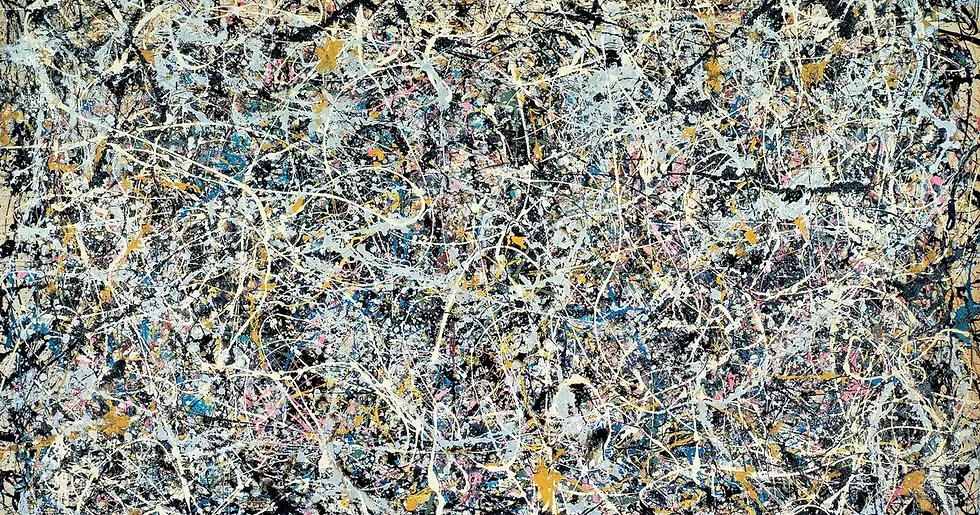
Alma Thomas’s work connects closely to abstraction, using color and pattern as a form of expression.
Assignment: Alma Thomas–Inspired Abstract Painting
You will create your own abstract painting inspired by the work of Alma Thomas, using your knowledge of color theory, pattern, and rhythm.
Objectives
Your artwork should:
Be abstract (no realistic objects required)
Clearly show pattern and rhythm
Use intentional color choices
Demonstrate thoughtful, planned mark-making
⚠️ Nothing should be random. Every mark should feel purposeful.
Color Theory Review
Before starting, review the following concepts:
Primary, Secondary, and Tertiary colors

Warm vs. Cool colors

Complementary, Analogous, and Triadic color schemes

We will also review how color affects mood and emotion. As you plan, note which colors and meanings appeal to you and why.
What Is Repetition?
Repetition means reusing the same or similar elements throughout an artwork. Repetition creates:
Unity
Consistency
Visual rhythm
This is a key feature of Alma Thomas’s work.
Planning (Rough Draft)
Before painting, you will complete a rough draft:
Plan your color scheme
Sketch out your patterns and spacing
Think about how rhythm will be created through repeated marks
This planning step is required.

Things to Remember While Painting
Be mindful of brush size — how large or small do you want your marks?
Do not use paint straight from the bottle.
Mix your own colors using white, black, or other colors
Create rhythm by varying the spacing between marks
Stay true to the style of Alma Thomas: repetition, pattern, and vibrant color
You will use tempera paint to complete your final artwork.
Materials Needed
Blank paper
Pencil
Tempera paint
Paintbrushes
Water cup
Palette
Directions
Using tempera paint, create an abstract artwork inspired by Alma Thomas’s style.
Remember:Her work relies on repetition, pattern, and rhythm — these should be your top priorities.
Things to Consider
Are your marks consistent and intentional?
Are your color choices thoughtful and planned?
Is this a piece you would enjoy looking at?
🎧 This is a great project to work on while listening to music.Have fun and trust the process!
4-Point Rubric
Criteria | 4 – Exceeds Expectations | 3 – Meets Expectations | 2 – Approaching Expectations | 1 – Needs Improvement |
Pattern & Rhythm | Pattern and rhythm are very clear, intentional, and consistent throughout the entire artwork | Pattern and rhythm are clearly present and mostly consistent | Some use of pattern and rhythm, but it is inconsistent or unclear | Little to no evidence of pattern or rhythm |
Color Use & Mixing | Colors are thoughtfully mixed, expressive, and enhance the overall composition | Colors are mixed appropriately and support the artwork | Limited color mixing or unclear color choices | Paint used straight from the bottle with little planning |
Intentional Mark-Making | Every mark feels purposeful and well-planned | Most marks are intentional with minimal randomness | Some marks appear random or rushed | Marks are mostly random or careless |
Effort & Craftsmanship | Exceptional effort, clean work, and strong attention to detail | Good effort with neat craftsmanship | Inconsistent effort or messy areas | Minimal effort and poor craftsmanship |


Comments